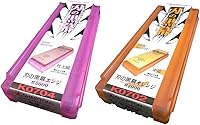
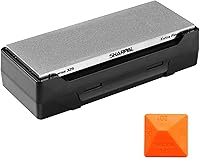
8 Best Knife Sharpening Stones: Oil, Diamond and Ceramic (October 2026)
The best best knife sharpening stones include the SHARPAL 162N Diamond Sharpening Stone for dry sharpening, the Dan's TRI-8 Arkansas Tri-Hone for a complete Arkansas set, and the DMT D8F Dia-Sharp Bench Stone for a continuous fine surface.
On this page (5 sections)
The best knife sharpening stone for most home cooks is the SHARPAL 162N, a double-sided diamond stone with 325 and 1200 grit faces that can be used dry. For a traditional three-grade setup, Dan's TRI-8 combines coarse silicon carbide with medium and fine Arkansas stones.
Your choice depends on how much edge repair you expect to do and which sharpening routine you want to maintain. Oilstones use lubricant, immersion stones need water, and diamond stones can offer a dry option.
Start with our guide to sharpening stones for kitchen knives if you want a broader overview of stone types. For a single familiar waterstone step, compare our picks for the best whetstones for kitchen knives.
Our picks at a glance
-
1

-
2

-
3

- 4
 Best for fine ceramic sharpeningCheck it
- 5
 Check it
Norton IM200 Oil Stone Sharpening Kit
Best for a stable oilstone system - 6
 Best for a medium-grit waterstoneCheck it
- 7
 Best for a simple oilstone bench setupCheck it
- 8
 Check it
Arkansas Stone Set, Wood Mounted 8-Inch
Best for mounted Arkansas stones
How we chose the best knife sharpening stones
The best knife sharpening stones in this roundup cover different materials, grit ranges and sharpening setups. We compared the stated stone materials, included grits, dimensions and accessories, then matched them to common needs such as repairing a dull edge, maintaining a working edge or refining it.
A single fine stone is not a full sharpening range. If your knife has a damaged edge, a coarse stone or a multi-grade system may be a better starting point than a fine finishing stone.
Compare the best knife sharpening stones by type
The SHARPAL 162N offers two diamond grits and dry use, while the Norton IM200 provides three oilstones in a bench unit. Use the table to compare the stone types and included setup before reading each pick.
| Product | Best for | Grits | Surface | Sharpening setup | Our score |
|---|---|---|---|---|---|
| SHARPAL 162N Diamond Sharpening Stone | dry sharpening | 325 and 1200 | Double-sided diamond | Dry; storage box includes a non-slip base | 8.9 |
| Dan's TRI-8 Arkansas Tri-Hone | a complete Arkansas set | 8.6 | |||
| DMT D8F Dia-Sharp Bench Stone | a continuous fine surface | Dry or with water | 8.5 | ||
| Shapton GlassStone 4000 | fine ceramic sharpening | 8.3 | |||
| Norton IM200 Oil Stone Sharpening Kit | a stable oilstone system | 100, 150 and 320 | 8.2 | ||
| Suehiro Cerax 1010 Whetstone | a medium-grit waterstone | 8.1 | |||
| Norton Combination Oil Stone | a simple oilstone bench setup | 100 and 280 | 7.9 | ||
| Arkansas Stone Set, Wood Mounted 8-Inch | mounted Arkansas stones | 7.5 |
The best knife sharpening stones for different routines
The best stone depends on whether you prefer dry diamond sharpening, oil lubrication or a waterstone routine. These picks are ordered by their scores, with each one matched to a distinct use.
SHARPAL 162N Diamond Sharpening Stone: Best for dry sharpening
- Double-sided 325 and 1200 grit
- Monocrystalline diamond surface
- Sharpen dry
- Angle guide with 4 angles
Two diamond grits cover quick edge setting and honing, and the stone can be used dry. The included angle guide offers 14°, 17°, 20° and 25° positions.
Pros
- Two grit options on one stone
- Can sharpen dry
- Storage box doubles as a non-slip base
Cons
- The brand advises against using water
- One stone may not suit buyers who prefer a traditional waterstone
The SHARPAL 162N is the most flexible pick here for sharpening without a soaking or oil step. Its double-sided surface pairs 325 grit for quick edge setting with 1200 grit for honing, so one stone covers two stages.
The stainless steel base carries industrial monocrystalline diamonds, and the storage box has a non-slip rubber pad that can serve as a base. The included angle guide offers four positions: 14°, 17°, 20° and 25°.
SHARPAL says the stone should be used dry and advises against water because filings may rust on the surface. Its guidance also says to avoid high pressure, so use a light touch rather than bearing down.
Choose it if you want coarse and extra-fine diamond faces in one dry setup. If you want a single continuous fine surface for longer strokes, consider the DMT D8F below.
Dan's TRI-8 Arkansas Tri-Hone: Best for a complete Arkansas set
- Coarse silicon carbide, soft Arkansas and hard Arkansas stones
- Three 8 in stones
- Wood base
- 23° sharpening guide
Three stones provide coarse, medium and fine steps in a single system. The included guide is set at 23°.
Pros
- Three sharpening grades
- Includes a wood base and honing oil
- Arkansas stones are quarried in central Arkansas
Cons
- A fixed-angle guide may not match every knife
- Uses oil rather than a dry setup
Dan's TRI-8 is the clearest choice for a complete three-stone Arkansas system. It pairs a coarse silicon carbide stone with a medium soft Arkansas stone and a fine hard Arkansas stone, all 8 inches long.
The system includes a wood base, one ounce of honing oil and a 23° sharpening guide. That guide can help you keep a consistent angle, though its set angle may not match the bevel you want for every knife.
The coarse stone is the repair step, while the medium and fine Arkansas stones cover sharpening and edge maintenance. This progression suits someone who wants several grades together instead of building a set stone by stone.
Choose it if you want a three-grade bench setup and an included guide. For more background on how stone grades compare, read our whetstone grit chart.
DMT D8F Dia-Sharp Bench Stone: Best for a continuous fine surface
- Fine monocrystalline diamond surface
- 8 x 3 in sharpening surface
- Non-skid rubber feet
- Can be used dry or with water
The continuous fine diamond surface gives you room for long strokes on a bench. Non-skid feet help keep the stone steady.
Pros
- Continuous diamond surface
- Wide 8 x 3 in format
- No oil needed
Cons
- Fine grit alone may not suit major edge repair
- Does not include multiple sharpening grades
The DMT D8F suits buyers who want a wide, continuous fine diamond surface. Its 8 x 3 in bench plate gives you more width than the 8 x 1 5/8 in stones in Dan's set.
DMT describes the surface as fine and says the stone can be used dry or with water, with no oil needed. Four non-skid rubber feet support bench use, and the stone is designed for knives and other flat or pointed tools.
Because it has one fine grit, it is better suited to maintaining or refining an edge than repairing a badly damaged one. Pair it with a coarser stone if your sharpening needs include substantial edge work.
Choose it for a steady bench surface and a simple cleanup routine. See our best diamond sharpening stones for more diamond options.
Shapton GlassStone 4000: Best for fine ceramic sharpening
- Fine ceramic and glass construction
- 4000 grit model
- 8.27 x 2.76 in dimensions
This fine ceramic stone is a finishing option for sharpening routines that already cover dull or damaged edges. Its thin profile measures just under 0.4 in.
Pros
- Fine 4000 grit
- Ceramic and glass construction
- Compact thickness
Cons
- A fine finishing grit is not a full repair range
- A holder is recommended for a secure platform
The Shapton GlassStone 4000 is a fine ceramic option for sharpening routines that already have a coarser stage. Its 4000 grit makes it a finishing choice, rather than the first stone to reach for on a damaged or very dull edge.
The stone combines ceramic and glass and measures about 8.27 x 2.76 in. Its thin profile is 0.39 in, so plan a stable holder or base for sharpening.
Shapton describes its glass ceramic waterstones as designed for fast cutting. Treat that as the brand's claim; the practical fit here is a fine ceramic surface for someone who wants a finishing step.
Choose it if your routine needs a fine ceramic stone. For a medium-grit starting point, the Suehiro Cerax 1010 below is a closer match.
Norton IM200 Oil Stone Sharpening Kit: Best for a stable oilstone system
- Three oil stones: 100, 150 and 320 grit
- Self-contained bench unit
- Reservoir and rotating stone holder
- Angle guide included
The bench unit holds three oil stones on a rotating axis, with a reservoir and rubber feet. The grits are arranged for repair, sharpening and honing.
Pros
- Three stones in one bench system
- Reservoir keeps unused stones submerged
- Includes oil and angle guide
Cons
- Oilstone setup requires lubricant
- Bench unit takes more storage space than a single stone
The Norton IM200 is the most complete oilstone bench system here. It includes 100, 150 and 320 grit stones in a self-contained unit with a reservoir, rotating holder, rubber feet and angle guide.
The coarse and medium stones are silicon carbide, while the fine stone is aluminum oxide. The rotating holder lets you bring each stone into position, and the reservoir holds the unused stones.
This setup takes more counter and storage space than a single stone, and it uses sharpening oil. The included guide is useful for positioning a blade, though you should still choose an angle suited to your knife.
Choose the IM200 if you want three grades and a dedicated bench unit in one kit. For a simpler two-sided oilstone, the Norton Combination Oil Stone has a more compact format.
Suehiro Cerax 1010 Whetstone: Best for a medium-grit waterstone
- Medium 1000 grit
- Ceramic material
- Immersion type
A 1000-grit ceramic stone gives you a medium sharpening step. Its immersion type means you should check the brand's soaking guidance before use.
Pros
- Common medium 1000 grit
- Ceramic construction
- Full-size sharpening dimensions
Cons
- No coarse or fine companion grit included
- Soaking guidance should be confirmed before use
Suehiro Cerax 1010 is the straightforward medium-grit pick in this group. Its 1000 grit ceramic surface fits routine sharpening when you want a single middle step rather than a coarse repair stone or fine finishing stone.
This is an immersion-type stone, so check Suehiro's care guidance before using it. Its dimensions are about 8.07 x 2.87 x 1.14 in, giving it a substantial surface for kitchen knives.
The Cerax 1010 does not include another grit, so it may not cover every edge condition by itself. If you need to remove more material from a very dull edge, add a coarse stone; if you want a refined finish, add a finer one.
Choose it if you want a medium ceramic waterstone and already know how you will handle soaking and storage. Our guide to using a whetstone covers the basic sharpening routine.
Norton Combination Oil Stone: Best for a simple oilstone bench setup
- Dual-sided 100 and 280 grit
- Prefilled with oil
- 8 x 2 in stone
Two grit faces cover repair and sharpening in one bench stone. The stone comes prefilled with oil.
Pros
- Two grades on one stone
- Bench-friendly 8 x 2 in size
- Prefilled with oil
Cons
- Oil is part of the sharpening setup
- No fine finishing grit
The Norton Combination Oil Stone offers two working faces in one bench stone. One side is 100 grit for repair, and the other is 280 grit for sharpening and maintaining edges.
The stone measures 8 x 2 x 1 in and arrives prefilled with oil. That makes it a more compact oilstone choice than the IM200 system, though it does not include a fine finishing grade or a bench holder.
Choose it if you want a simple coarse and medium oilstone combination for knives and household tools. If you want multiple Arkansas grades on a base, the mounted set below offers a different style of setup.
Arkansas Stone Set, Wood Mounted 8-Inch: Best for mounted Arkansas stones
- Three Arkansas stones: soft, hard and black
- Coarse, fine and extra-fine grades
- Wood base included
Three Arkansas grades arrive on a wood base, and the set can be used on a bench or held by hand. Check the exact stone dimensions before choosing a size.
Pros
- Three grades in one set
- Wood base included
- Can be used on a bench or handheld
Cons
- The set's exact dimensions should be confirmed
- No sharpening guide is mentioned
The Arkansas Stone Set, Wood Mounted 8-Inch brings together soft, hard and black Arkansas stones on a wood base. The set covers coarse, fine and extra-fine grades, and can be used on a bench or handheld.
The three-stone format gives you more grade options than a single combination stone. The exact size options vary, so confirm the dimensions that suit your knives and available sharpening space before ordering.
No sharpening guide is mentioned for this set, so it suits someone comfortable managing the blade angle. Choose it if you want mounted Arkansas stones with several grades and prefer a simple wood base.
How should you choose a knife sharpening stone?
Choose a stone by edge condition, preferred lubricant and the number of sharpening stages you need. A coarse stone removes material faster for repair, while medium and fine grits support routine sharpening and refinement.
Which grit should you choose for a best knife sharpening stone?
A 1000-grit stone is a common middle step for routine sharpening, while coarse grits help with repair and higher grits refine an edge. The phrase best knife sharpening stone can point to different jobs, so choose the grit that matches your knife's condition rather than buying the finest stone available.
For one stone that spans more than one stage, consider a combination stone or multi-stone system. Our whetstone numbers guide explains what the numbers mean.
Should you buy oil, diamond or ceramic?
Choose oil if you prefer an oilstone routine, diamond if dry sharpening appeals to you, or ceramic if you want a ceramic stone with a water-based routine. The stone's material and care guidance determine how you prepare and clean it.
A dry diamond stone can simplify setup, while an oilstone needs lubricant. Immersion ceramic stones need you to follow their soaking instructions, so check the care guidance before your first session.
Do you need a stone holder?
A holder or stable base helps keep a stone from moving while you sharpen. The SHARPAL 162N includes a storage box with a non-slip base, and the Norton IM200 and Dan's TRI-8 include bench setups.
For a separate base, see our guide to whetstone holders and bases. Whichever stone you choose, keep the sharpening surface steady and your fingers clear of the blade path.
Which knife sharpening stone should you choose?
Choose the SHARPAL 162N if you want two diamond grits and dry sharpening, Dan's TRI-8 if you want a three-stone Arkansas set, or Suehiro Cerax 1010 if you want a medium ceramic waterstone. The right best knife sharpening stone is the one whose grit range and care routine fit your knives and sharpening habits.
For the next step, use our beginner's walkthrough for using a whetstone to build a consistent sharpening routine.
Our top 3 picks at a glance
-
1
-
2
-
3
Frequently asked questions
What type of sharpening stone is best for kitchen knives?
A medium stone around 1000 grit is a useful starting point for routine sharpening. Choose a waterstone, oilstone or diamond stone based on the setup you prefer and the edge condition.
For a wider overview of grit and stone choices, see our kitchen knife sharpening stone guide.
Are diamond sharpening stones better than whetstones?
Diamond stones can be used dry and are a practical option when you want to avoid soaking a stone or using oil. Waterstones and oilstones offer different sharpening surfaces and routines, so the better choice depends on your preferences and the knife's needs.
Compare the tradeoffs in our whetstone vs diamond stone guide.
Do I need coarse and fine sharpening stones?
A coarse stone helps with a dull or damaged edge, while a finer stone can refine an edge after sharpening. A combination stone or multi-stone system gives you more than one grade without choosing each stone separately.
Use our whetstone grit chart to match grit to the job.
Should I choose an oilstone or a waterstone?
Choose an oilstone if you want a sharpening routine that uses honing oil, and a waterstone if you prefer a water-based setup. Follow the care instructions for the stone you choose, since soaking and lubrication needs differ.
Our whetstone vs oilstone comparison explains the main differences.