How to Flatten a Whetstone
To learn how to flatten a whetstone, use a suitable flattening stone or abrasive on a flat surface. Work evenly with water as the stone requires, and check the face often until it is level.
On this page (9 sections)
- How can you tell if a whetstone is dished?
- What should you choose to flatten a whetstone?
- How do you flatten a whetstone step by step?
- How can you flatten a whetstone with sandpaper?
- How do you keep a whetstone from dishing again?
- Do you need to soak a stone before flattening it?
- What mistakes can make flattening less effective?
- Which whetstone fits your maintenance routine?
- What should you do after flattening a whetstone?
To learn how to flatten a whetstone, use a suitable flattening stone or abrasive on a flat surface. Add water as the stone requires, rub evenly, and check the face often until it is level.
A dished surface can make it harder to hold a steady knife angle. The fix is to lower the high areas around the dip, not to press harder on the blade.
How can you tell if a whetstone is dished?
A whetstone is dished when part of its sharpening face sits lower than the surrounding surface. Lay a straightedge across it in several directions; a visible gap can reveal a dip.
You can also look across the wet face for a shallow bowl shape or for areas that do not touch the abrasive during flattening. A small change may be difficult to see, so check the center, edges, and corners.
Flattening removes stone material, so the surface does not need to look new. Correct it when unevenness could interfere with steady sharpening strokes.
What should you choose to flatten a whetstone?
Choose a dedicated flattening stone if you want a tool made for resurfacing, or suitable wet-and-dry sandpaper if your whetstone allows it and you can secure a flat backing. Either way, the surface must stay stable and even while wet.
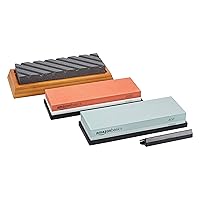
A dedicated tool simplifies the choice of abrasive. The YeopAsda set includes a black flattening stone, two double-sided sharpening stones, a bamboo base, angle and honing guides, a leather strop, polishing compound, and cut-resistant gloves.
This set suits someone building a complete sharpening station and wanting several accessories in one purchase. Skip it if you only need a flattening tool or already have sharpening accessories you prefer.
For help deciding whether a separate tool makes sense, see flattening stones for whetstones. A suitable abrasive on a flat backing can also work when the stone's care directions permit it.
How do you flatten a whetstone step by step?
Wet the stone as directed, rub it evenly against the flattening surface, and check often. Spread pressure across the face so you do not create a new slope.
- Read the care directions for both the whetstone and flattening tool.
- Wet or soak the whetstone only as its directions require.
- Wet the flattening surface if the method calls for water.
- Move the whetstone across the abrasive in overlapping passes.
- Rotate it and repeat in other directions.
- Rinse away slurry, then check the face with a straightedge.
- Repeat in short rounds where the face remains uneven.
Keep as much of the sharpening face in contact with the abrasive as possible. Working only on one corner or edge can round it or leave the face less level.
Pause to rinse away slurry and inspect your progress. Short rounds make it easier to stop when the surface is level without removing more material than needed.
Does a grid help when flattening a whetstone?
A light pencil grid can show which areas have touched the flattening surface. Rub until the marks fade evenly, then use a straightedge to check that the face is level.
Skip the grid if the stone's care directions advise against marking its surface. The marks are a visual guide, not a replacement for checking the finished face.
How can you flatten a whetstone with sandpaper?
Suitable wet-and-dry sandpaper can work on a flat, stable backing if your whetstone's care directions allow it. Secure the abrasive so it cannot shift, wet it as directed, and move the stone in short, even passes.
The backing matters as much as the abrasive. A flexible sheet on an uneven surface can follow the stone's dip instead of correcting it.
Check often, and replace sandpaper if it clogs or wears unevenly. Rinse away the slurry before sharpening again.
How do you keep a whetstone from dishing again?
Use the full sharpening face instead of working in one narrow strip. Move the blade along the stone and vary where each stroke begins, so wear spreads across the surface.
Support the stone securely and follow its directions for water and drying. A stone that slides can lead to uneven pressure and less controlled strokes.
A combination stone has two sharpening faces, and both may need attention over time. The KING KW65 combines 1000 and 6000 grit faces and includes a plastic base.
Choose this combination stone if you want those two grits together. Skip it if you need a standalone flattening tool; its included base supports sharpening, while flattening requires a separate suitable abrasive.
Keep it wet during use and follow its soaking directions.
Water needs vary by stone. Read how long to soak a whetstone before settling on a routine.
Do you need to soak a stone before flattening it?
Follow the stone's care directions because soaking needs differ. An immersion stone may need soaking, while another stone may need only water on its surface.
The Shapton GlassStone 1000 does not need soaking before use, which suits someone who wants a quicker setup. Skip it if you want a thicker stone or a multi-grit option; this is a single 1000-grit stone with a thin profile.
Use its care directions for flattening, too. Once the face is level, follow how to use a whetstone for sharpening guidance.
What mistakes can make flattening less effective?
Uneven pressure and one-direction passes can leave a slope or round the edges. Use overlapping passes in more than one direction, then check the surface before continuing.
Avoid these common mistakes:
- Pressing hard on one spot to remove a dip quickly.
- Using a warped board or flexible backing.
- Letting the stone slide on a wet surface.
- Grinding for a long time without checking progress.
- Checking the face before rinsing off slurry.
Use a method that suits your stone. If you're unsure whether soaking or a certain abrasive is appropriate, check the stone's care directions first.
After flattening, rinse and dry it as directed. See how to clean and store a whetstone for basic care.
Which whetstone fits your maintenance routine?
Pick a stone whose setup suits how you sharpen. The Suehiro Cerax 1010 is a medium-grit #1000 immersion stone, so it fits someone comfortable soaking a stone before use.
Choose the Cerax if you want a single medium-grit stone and do not mind the soaking step. Skip it if you prefer a stone that does not need soaking before use.
Flatten it when its face becomes uneven, then follow its directions for rinsing and drying.
For help matching a grit to a sharpening task, use the whetstone grit chart.
What should you do after flattening a whetstone?
Rinse off the slurry and confirm that the face is level before sharpening. Follow the stone's care directions for drying and storage.
Choose a dedicated flattening stone if you want a tool made for resurfacing. Use a suitable sandpaper method if your stone permits it and you can keep the backing flat.
The decision is simple: if the face has a dip, flatten it with a compatible method; if it is level, keep sharpening and check again during routine care. For more help with how to flatten a whetstone and choosing a leveling tool, see our guide to flattening stones for whetstones.
Frequently asked questions
How do you know when a whetstone needs flattening?
Flatten a whetstone when its sharpening face has a visible dip, slope, or uneven wear. Lay a straightedge across it in several directions; a gap beneath the straightedge can reveal a low area.
Check the full face, since wear may be concentrated where you sharpen most often.
Can you flatten a whetstone with sandpaper?
Yes, suitable wet-and-dry sandpaper on a flat, stable backing can flatten some whetstones. Wet the abrasive if its instructions allow, move the stone evenly, and check progress often.
First check the care directions for your whetstone.
Some stones call for a specific method.
How often should you flatten a whetstone?
Flatten a whetstone when it becomes uneven, rather than on a fixed schedule. How soon that happens depends on the stone, how often you sharpen, and where your strokes wear the surface.
Check with a straightedge during routine care so you can correct a dip before it affects your sharpening strokes.
Do all whetstones need soaking before flattening?
No. Soaking depends on the stone.
Some waterstones need soaking, while others need only a splash or no soak before use.
Follow the stone's care directions when flattening, too.
Keep the surface wet as needed to carry away slurry.