Sharpening Stones for Kitchen Knives: A Buyer's Guide
A 1,000-grit water stone is a useful starting sharpening stone for kitchen knives with a dull, undamaged edge. Choose a coarser stone for repair, a finer stone for finishing, or a dry-use diamond stone if you want to avoid water.
On this page (8 sections)
- Which sharpening stone is right for kitchen knives?
- How do grit numbers guide your choice?
- Should you choose water, diamond or oil?
- What size sharpening stone should you choose?
- How do you set up a sharpening stone?
- How do you care for a kitchen knife sharpening stone?
- How should you compare sharpening stones?
- Which sharpening stone fits your kitchen?
A 1,000-grit water stone is a useful first sharpening stone for kitchen knives with a dull, intact edge. Add a finer stone when you want a more refined finish, choose a coarse abrasive for repair, or use a diamond stone if you prefer dry sharpening.
Start with the knife's edge condition and the sharpening routine you can maintain. Routine sharpening, repairing a chip and refining an already sharp edge call for different abrasives and grit ranges.
This guide explains how to choose, set up and care for a stone, then compares four options for different kitchen routines. For a broader shortlist, see our best whetstones for kitchen knives and best knife sharpening stones.
Which sharpening stone is right for kitchen knives?
A water stone around 1,000 grit is a practical choice for routine sharpening if you're comfortable using water and keeping the surface flat. The right stone depends on the edge, your preferred lubricant and how much setup you want.
| Stone type | Suits | Consider |
|---|---|---|
| Water stone | Routine sharpening with water | Some need soaking; the surface wears and may need flattening |
| Diamond stone | Dry sharpening and harder materials | Use the care method recommended for the stone |
| Oilstone | A bench setup with oil lubrication | Oil belongs in the routine, and the sharpening feel differs |
| Fine finishing stone | Refining an edge after the main sharpening | A fine grit is slow for substantial repair |
The edge condition matters more than the number of grits included. A medium stone can restore an ordinarily dull edge, but it takes longer to remove a large chip than a coarse abrasive.
If you're new to sharpening, start with how to use a whetstone. A suitable stone helps, but consistent angle control and a stable surface matter just as much.
What sharpening stone for kitchen knives should you buy first?
For a single-stone setup, start around 1,000 grit. That middle range can sharpen an ordinarily dull edge without removing material as quickly as a coarse repair stone.
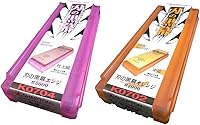
The KING KW65 pairs 1,000- and 6,000-grit faces in one water stone and includes a plastic base. It suits someone who wants routine sharpening and a finer follow-up step in one purchase.
Choose a two-sided stone if you want a simple progression without storing separate stones. Skip the fine side as a reason to buy if you mainly need to repair chipped or badly worn edges.
When should you choose a coarse stone?
Choose coarse grit when an edge needs repair or has lost enough material that a medium stone would take too long. Coarse abrasives remove material quickly, so use controlled pressure and check the edge often.
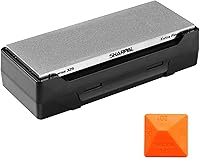
The SHARPAL 162N has coarse 325-grit and extra-fine 1,200-grit sides. It's a dry-use diamond stone, and its storage box has a non-slip rubber pad that can serve as a base.
This option suits cooks who want a coarse repair face and a finer face without water or oil. Skip coarse grit for a knife that's only slightly dull, since unnecessary material removal shortens the edge's useful life.
Is a fine stone necessary for kitchen knives?
A fine stone is optional for many home cooks. If your main goal is a sharp everyday edge, start with a medium stone and add a finer one only when you want a particular finish or sharpening sequence.
The Naniwa Chosera 3000 is a ceramic finishing stone with a base and a dressing stone for cleaning. Its 3,000 grit suits refinement after the main sharpening work.
This is a sensible add-on for someone who already has a reliable way to sharpen a dull edge. Skip it as your only stone if your knives need substantial repair.
How do grit numbers guide your choice?
Grit helps you estimate how quickly a stone removes material and what stage of sharpening it suits. A range around 800 to 1,200 is a common starting point for routine work on a dull but undamaged kitchen knife.
| Grit range | Typical role | Kitchen knife use |
|---|---|---|
| 100 to 400 | Fast removal and repair | A badly worn edge or small chip |
| 600 to 1,200 | General sharpening | A dull edge without major damage |
| 2,000 to 4,000 | Refinement | A sharp edge that needs a finer finish |
| 5,000 and above | Fine finishing | A refined finish after the edge is already sharp |
These ranges are a guide, not a rule for every stone or knife. For more detail on the numbers, use our whetstone grit chart.
How does a coarse, medium or fine stone change the job?
A coarse stone restores an edge quickly, a medium stone handles routine sharpening, and a fine stone refines an edge that is already sharp. Choosing the right stage keeps you from spending too long on a very fine stone or removing more steel than needed with a coarse one.
Start with the least aggressive grit that can handle the edge condition. If a medium stone makes little progress on a damaged edge, move to a coarse stone rather than pressing harder.
The Norton IM200 includes 100- and 150-grit silicon carbide stones and a 320-grit aluminum oxide stone. Those grits are coarse compared with a typical 1,000-grit routine sharpening stone, so this kit is better suited to buyers who want its repair and bench-system approach than to someone seeking a single everyday stone.
Choose the Norton if you want a contained work area and three stones used in sequence. Skip it if you want a compact water stone or a finer finishing face for polishing.
When should you add a finishing stone?
Add a finishing stone after you can reliably sharpen the edge with a coarse or medium grit. A fine stone can refine the edge, but it doesn't replace the material removal needed to repair damage.
The Chosera 3000 is a clear example of a finishing stone. Pair it with a suitable sharpening stone if your knives are dull, rather than expecting the fine grit to do every stage efficiently.
Should you choose water, diamond or oil?
Choose the abrasive and lubricant that fit your kitchen routine. Water stones use water, the SHARPAL 162N is designed for dry sharpening, and the Norton IM200 includes sharpening oil.
The KING KW65 is soaked in water and kept wet while in use. Its stone is 8 in long, 2.5 in wide and 1 in thick, with a plastic base.
The SHARPAL 162N uses monocrystalline diamond on a stainless steel base and is designed for dry sharpening. Its coarse and extra-fine faces cover two stages, and the storage box's rubber pad can help keep it steady.
The Norton IM200 is an oilstone bench system with a holder, reservoir, angle guide and sharpening oil. Its stones are 100, 150 and 320 grit, so consider whether that coarse range fits your sharpening jobs.
A water stone may need soaking or regular wetting, while an oilstone adds oil to setup and cleanup. A dry-use diamond stone avoids adding water or oil during sharpening, which can simplify the work area.
For a closer comparison, read about whetstones and diamond stones or whetstones and oilstones.
Which abrasive suits your sharpening routine?
Pick water stones if water-based sharpening fits your routine and you don't mind drying and flattening the stone as needed. Pick a diamond stone if you want a dry setup, or an oilstone kit if you prefer a dedicated bench system with oil.
Don't choose only by abrasive label. A water stone with the grit you need may be a better fit than a diamond stone with a grit range you won't use, and a multi-stone oil kit may be more setup than a home cook wants.
What size sharpening stone should you choose?
Choose a stone long and wide enough to give your knife room to move through a controlled stroke. A larger working surface is useful for a chef's knife, while a stable base matters for every size.
The KING KW65 is 8 in by 2.5 in by 1 in. The SHARPAL 162N is 8 in by 3 in, and the Chosera 3000 measures about 8.27 in by 2.76 in.
Check the stone's usable surface and its base together. A stone that fits a drawer but shifts on the counter makes it harder to keep your strokes controlled.
A separate holder can help stabilize a stone that doesn't include a suitable base. See our guide to whetstone holders and bases before you settle on a countertop setup.
How do you set up a sharpening stone?
Set up on a stable, uncluttered counter with enough room to move the knife without hitting the sink, backsplash or nearby tools. Place the stone on a non-slip base or holder before adding water or oil.
For a water stone, check whether it should be soaked or simply kept wet during use. The KING KW65 is soaked in water and kept wet while sharpening, so plan for a nearby water source and a place to dry it afterward.
For a dry-use diamond stone, keep the work area clear and follow the stone's care directions. The SHARPAL 162N's storage box includes a rubber pad that can serve as a base.
For an oilstone, use the supplied sharpening oil and keep the holder's reservoir and work surface in mind. The Norton IM200's built-in bench setup is useful when you want the stones held in position during sharpening.
Before starting, identify which grit you'll use and where you'll put the knife between strokes. A stable stone, clear workspace and deliberate pace help reduce slips.
How should you hold the knife and use the stone?
Hold the knife at a consistent angle and move the edge across the stone with controlled strokes. The exact angle depends on the knife, and a guide can help you keep the angle steadier while you learn.
Use light, even pressure and work along the full edge rather than concentrating on one short section. Pause to check progress instead of speeding up or pressing harder when the edge isn't improving.
The SHARPAL 162N includes an angle guide with four angles: 14°, 17°, 20° and 25°. The Norton IM200 also includes an angle guide, which may suit a buyer who wants an aid with a bench setup.
How do you know when to switch grits?
Switch from coarse to medium after the damaged or dull section has been reshaped enough to continue refining. Move to a fine stone only after the edge is sharp at the previous stage.
Keep the sequence simple: use the coarsest grit needed, then refine with a suitable medium or fine grit. You don't need to use every face in a set every time you sharpen.
How do you care for a kitchen knife sharpening stone?
Use the lubricant and cleaning method meant for the stone, then dry or store it as directed. Water, oil and dry-use diamond stones have different care needs, so don't transfer one stone's routine to another.
Water stones wear as they remove material. Inspect the surface from time to time and flatten it when it becomes dished, since a hollow stone makes it harder to hold a consistent angle.
The diamond SHARPAL 162N is designed for dry sharpening. Avoid adding water during sharpening, and keep it clean according to its care instructions.
The Norton IM200 uses sharpening oil. Keep oil with that system and avoid mixing it with water-stone care unless the stone's instructions allow it.
Don't leave a wet stone stored where moisture stays trapped. Let it dry as its instructions direct, and keep it in a place where it won't be knocked or chipped.
For step-by-step care, read how to flatten a whetstone and how to clean and store a whetstone.
What common sharpening stone mistakes should you avoid?
The most common mistakes are using the wrong grit, letting the stone move, changing the angle mid-stroke and using the wrong lubricant. Each can make sharpening slower or less controlled.
- Starting too fine: A fine stone takes longer to repair a dull or damaged edge. Begin with a grit suited to the edge condition.
- Pressing harder instead of changing grits: More pressure doesn't make a fine stone behave like a coarse one. Move to a more suitable grit.
- Letting the stone rock or slide: Stabilize it before sharpening, and pause if the base shifts.
- Ignoring a dished surface: A worn hollow makes consistent angle control harder. Flatten a water stone when needed.
- Mixing lubricants: Keep water, oil and dry-use routines separate unless the stone's instructions say otherwise.
- Expecting every grit to be useful each time: Use only the stages the edge needs. Extra steps add work without always improving the result.
If sharpening feels inconsistent, stop and check the stone, setup and angle before continuing. A steady routine is safer and more useful than rushing through extra strokes.
How should you compare sharpening stones?
Compare the stone's grit, lubricant, size and included setup against the edge work you expect to do. A stone that matches your routine is more useful than a set of extra features you won't use.
- For a first stone: Choose a medium grit and a stable base.
- For dry sharpening: Consider a diamond stone designed for dry use.
- For repair work: Choose a coarse stone, then plan a medium grit for sharpening.
- For an oil-based bench setup: Consider a kit with a holder and oil.
- For a finer finish: Add a fine stone after you have a reliable sharpening step.
The scores reflect how each stone's stated grit range, material and included setup match these uses. The SHARPAL 162N ranks highest here because it combines a coarse and finer face with a dry setup and a base pad.
| Stone | Score | Main use | Included setup |
|---|---|---|---|
| SHARPAL 162N | 8.9 | Dry sharpening and honing | 325/1,200 diamond stone, storage box, non-slip pad and angle guide |
| Naniwa Chosera 3000 | 8.5 | Fine finishing | 3,000 ceramic stone, base and dressing stone |
| KING KW65 | 8.4 | Routine sharpening and finer finishing | 1,000/6,000 water stone and plastic base |
| Norton IM200 | 8.2 | Repair, sharpening and honing in a bench system | Three oil stones, holder, oil and angle guide |
Which sharpening stone fits your kitchen?
Choose the KING KW65 if you want a 1,000/6,000 water stone for routine sharpening and a finer step. Pick the SHARPAL 162N if you prefer dry sharpening and want coarse and extra-fine faces in one stone.
Choose the Norton IM200 if a bench system, oil reservoir and angle guide fit your routine. Add the Chosera 3000 when you already have a sharpening stone and want a dedicated finishing step.
If you want more options, compare our best whetstones for kitchen knives and best diamond sharpening stones. Once you choose a stone, follow our whetstone setup and sharpening guide to get started.
Frequently asked questions
What grit sharpening stone should I use for kitchen knives?
A stone around 1,000 grit is a useful starting point for a dull but undamaged kitchen knife. Use a coarser stone when the edge needs substantial repair, then move to a finer stone if you want a more refined finish.
A very fine stone removes material more slowly, so it usually isn't the first choice for a dull edge.
Is a 1,000/6,000 grit stone enough for kitchen knives?
A 1,000/6,000 combination stone covers routine sharpening and a finer finishing step for many kitchen knives. The 1,000 side does the main sharpening, while the 6,000 side refines the edge.
The KING KW65 includes a plastic base and uses water.
Are diamond stones good for kitchen knives?
Diamond stones can suit kitchen knives if you want a stone designed for dry sharpening. The SHARPAL 162N has coarse 325-grit and extra-fine 1,200-grit sides for edge setting and honing.
Its storage box includes a non-slip rubber pad that can serve as a base.
Do kitchen knife sharpening stones need water or oil?
It depends on the stone. The KING KW65 uses water, the SHARPAL 162N is designed for dry sharpening, and the Norton IM200 kit includes sharpening oil.
Follow the care instructions for the stone you choose, including how to lubricate and dry it.
Should I buy a single stone or a sharpening kit?
Choose a single stone if you want a simple setup and already have a stable base and know how to hold an angle. The Norton IM200 kit includes a holder, oil reservoir, angle guide, sharpening oil and three stones.
Check that the kit's grit range suits the work you expect to do.