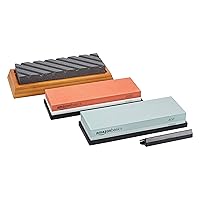
What Is a Whetstone and Do You Need One?
A whetstone is a flat abrasive stone that sharpens a knife as you move its edge across the surface at a steady angle. You may need one if you want direct control over sharpening and are willing to learn a simple technique.
On this page (9 sections)
- What does a whetstone do?
- Is a whetstone the same as a water stone?
- What grit whetstone should you choose?
- Do you need a whetstone for kitchen knives?
- Which whetstone setup fits a beginner?
- When is a finer whetstone useful?
- When is a coarser whetstone useful?
- What care does a whetstone need?
- Do you need a whetstone?
A whetstone is a flat abrasive stone that sharpens a knife as you move its edge across the surface at a steady angle. You may need one if you want control over sharpening and are willing to learn the technique.
The word “whet” means to sharpen, so a whetstone isn't necessarily a water stone. Many kitchen sharpening stones use water, but the type of stone determines whether it needs soaking, a splash of water, or another lubricant.
What does a whetstone do?
A whetstone removes small amounts of metal from a knife edge to form a sharper edge. You draw the blade across the stone while keeping the angle steady, then repeat on both sides of the blade.
The stone's grit affects how much material it removes and how it finishes the edge. Coarse stones work faster on very dull or damaged edges, while finer stones refine an edge that is already in good shape.
“Whetstone” can refer to stones with different materials and care needs. Check the stone's instructions before adding water or oil, since the wrong lubricant or soaking routine may not suit it.
For a closer look at grit numbers and how to compare them, see our guide to what whetstone numbers mean.
Is a whetstone the same as a water stone?
No, “whetstone” describes a sharpening stone, while “water stone” describes a stone used with water. Many whetstones are water stones, but the terms don't mean exactly the same thing.
Some water stones need soaking before use; others need only a wet surface. Oil stones use honing oil instead, and diamond plates generally have different care instructions.
Follow the directions for the specific stone you own. Don't switch between water and oil unless its maker says that is suitable.
What grit whetstone should you choose?
Choose grit based on the knife's edge condition and the finish you want. A medium stone around 1000 grit is a common choice for routine sharpening, while a fine stone can refine an edge after the main sharpening work.
A coarse grit can help when an edge is very dull or damaged, but it removes metal faster and calls for care. A high grit is not a substitute for a coarser stone if the edge needs more work.
A combination stone puts 2 grits on one stone, which can reduce the number of pieces you need to store. Compare options in our whetstone grit chart, or browse our sharpening stones for kitchen knives guide.
Do you need a whetstone for kitchen knives?
A whetstone makes sense if you want to sharpen at home and can practice holding a steady angle. It gives you direct control over how you work along the edge, but it takes more attention than a pull-through sharpener.
Choose a different method if you need a quick, guided process or don't want to manage stone care. A rolling knife sharpener can guide the blade at a set angle, while a honing rod helps maintain an edge between sharpening sessions.
A whetstone can be a practical choice for people who sharpen several kitchen knives over time. If you sharpen only once in a while, a sharpening service may be simpler.
Which whetstone setup fits a beginner?
A beginner can start with a medium-grit stone and a stable base, then add a finer grit if they want to refine the edge. An angle guide may also help you keep the blade position consistent while learning.
The Sharp Pebble 1000/6000 Whetstone includes a bamboo base and angle guide.
The KING Starter Set 1000/6000 Whetstone includes a plastic base and angle holder.
Both options include an angle guide, but technique still matters. Read how to use a whetstone for the basic sharpening steps before working on a knife you care about.
When is a finer whetstone useful?
A finer stone is useful after sharpening when you want to refine the edge or polish it. It usually works best after a coarser or medium grit has done the main sharpening.
The Sharp Pebble 3000/8000 Whetstone With Flattening Stone has 3000- and 8000-grit sides and includes a flattening stone.
This is a better fit for someone who already has a way to handle a dull edge, or who wants a finer follow-up stone. A fine stone alone may take longer to restore a very dull knife.
When is a coarser whetstone useful?
A coarser grit can help restore a very dull edge because it removes material faster. Use it with light, controlled strokes and move to a finer grit if you want to refine the edge.
The Intelitopia 400/1000 and 3000/8000 Whetstone Set includes stones with 400-, 1000-, 3000-, and 8000-grit sides, plus a flattening stone, bamboo base, leather strop, and angle guide.
A multi-piece set can cover more sharpening stages, but you don't have to use every component in every session. Start with the grit that suits the edge and follow the stone's care instructions.
What care does a whetstone need?
Keep the stone clean, follow its water or oil instructions, and check that its surface stays flat. Repeated sharpening can wear a stone unevenly, which can make it harder to hold a consistent angle.
Some stones need flattening as they dish. Learn how to flatten a whetstone and how to clean and store one before making stone care part of your routine.
Do you need a whetstone?
Choose a whetstone if you want control over sharpening and will practice maintaining a steady angle. A 1000-grit stone is a useful starting point for routine edge work; add a coarse side for very dull knives or a fine side for edge refinement.
Choose a guided tool or sharpening service if you want less technique and maintenance. For a first stone, compare the Sharp Pebble 1000/6000 Whetstone and KING Starter Set 1000/6000 Whetstone based on whether you prefer a bamboo base or a plastic base.
Frequently asked questions
What is a whetstone used for?
A whetstone sharpens a knife by abrading its edge as you move the blade across the stone at a steady angle. Coarser grits can remove more material to repair or sharpen a dull edge, while finer grits refine the edge.
Choose a stone that suits the knife and the amount of sharpening it needs.
Does a whetstone need water?
Many whetstones are designed for water, but follow the instructions for your specific stone. Some need soaking, while others need only a splash or a wet surface.
Oil stones use a different lubricant, so don't add water or oil unless the stone's instructions call for it.
What grit whetstone should a beginner use?
A 1000-grit stone is a common starting point for routine sharpening because it can refresh a dull kitchen knife without removing material as quickly as a coarse stone. A finer side, such as 6000 grit, can refine the edge.
Very dull or damaged knives may need a coarser grit first.
Do you need a whetstone to sharpen kitchen knives?
No. A whetstone is one option, and it suits people who want control over the edge and are willing to practice.
A guided sharpener or a professional sharpening service may be easier if you don't want to learn angle control.
Match the method to your knife and comfort level.