Rolling Knife Sharpener vs Whetstone: Which Is Better? (October 2026)
Choose a rolling sharpener for guided, repeatable sharpening; choose a whetstone for more control over the edge. Your knife type, preferred setup and willingness to learn matter more than the tool alone.
On this page (7 sections)
- Rolling knife sharpener vs whetstone: what is the main difference?
- Which method is easier to learn?
- Which gives you more control over an edge?
- How do grit choices compare?
- What care does each method need?
- Which option suits your knives and routine?
- Which should you choose: a rolling knife sharpener or whetstone?
Choose a rolling sharpener for guided, repeatable sharpening; choose a whetstone for more control over the edge. In a rolling knife sharpener vs whetstone comparison, your knife type, preferred setup and willingness to learn matter more than the tool alone.
A rolling system holds a set angle and uses a disc that moves along the blade. A whetstone gives you a flat surface and more freedom to adjust your strokes, but you need to manage the angle yourself.
Both methods can maintain kitchen knives. The better fit depends on whether you value a guided routine or control over each stroke.

Rolling knife sharpener vs whetstone: what is the main difference?
A rolling sharpener guides the blade at a set angle, while a whetstone asks you to guide the blade across the stone. The first simplifies the motion; the second gives you more say over each stroke.
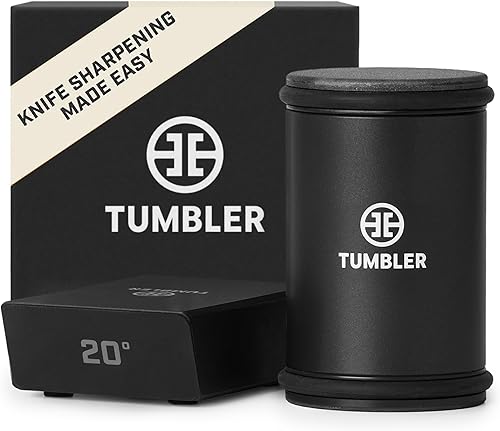
The HORL 3 Cruise pairs a diamond disc with a stainless steel honing disc and offers 15° and 20° angle choices through its magnetic support. The Tumbler Pro uses a diamond disc and ceramic honing disc with a magnetic angle support and removable disc system.
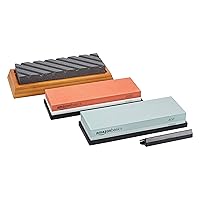
A whetstone uses a flat abrasive face. The Sharp Pebble has 1000 and 6000 grit sides, while the Amazon Basics set includes 400/1000 and 3000/8000 grit stones, plus a flattening stone.
The setup changes too. The HORL's diamond disc can be used without water, while both whetstone sets are water stones that need water and cleanup.
Which method is easier to learn?
A rolling sharpener is usually simpler to start because the support sets the knife angle. A whetstone takes practice to keep the blade steady through each stroke.
The HORL's magnetic support holds the knife in place, and its angle choices are fixed at 15° and 20°. The Tumbler Pro also has a magnetic support with precision-guided angles, though exact angle values aren't specified.
With a whetstone, you control the angle, pressure and path of the blade. An angle guide can help with positioning, but you still need to move the knife evenly across the stone.
The step-by-step rolling sharpener guide explains a basic setup and motion. For the stone method, see how to use a whetstone.
Is the rolling motion easier to repeat?
Yes, a guided support can make the same angle easier to repeat from session to session. It doesn't remove the need for careful placement and steady movement.
The HORL offers 2 angle choices, so you choose the one that suits the blade and use that setting consistently. A whetstone doesn't lock in a single angle, which gives you room to adjust but also makes consistency more dependent on practice.
The Tumbler Pro's removable disc system can also work with optional whetstone discs sold separately. That gives you a guided base with another abrasive format, though the discs aren't included with the sharpener.
Does a whetstone need more setup?
A whetstone needs a wet work area, a stable base and cleanup afterward. The rolling sharpeners here use discs without water.
The Sharp Pebble includes a bamboo base and angle guide. The Amazon Basics set includes a non-slip bamboo base, a silicone base and an angle guide, along with a flattening stone.
Those accessories help organize the work, but a whetstone still needs water and a clear surface. If you want to sharpen without preparing a wet area, a rolling sharpener may fit your routine better.
Which gives you more control over an edge?
A whetstone gives you more control over angle, pressure and stroke length. A rolling sharpener trades some of that flexibility for a guided angle and a more repeatable motion.
That control matters if you want to adjust your technique for different blades or refine an edge in a particular way. It also means more room for inconsistency while you are learning.
The HORL is more structured: choose 15° or 20°, then use the disc and honing disc. The Tumbler Pro uses guided angles and has optional whetstone discs for users who want to change the abrasive setup.
For someone who sharpens the same kitchen knives on a regular schedule, a fixed angle may be an advantage. For someone who wants to shape their technique and handle more edge work, a whetstone offers a broader range of motion.
How do grit choices compare?
Whetstones make grit options explicit, while the rolling systems here use their included discs for sharpening and honing. Choose a stone set based on the edge work you expect to do.
The Sharp Pebble combines 1000 and 6000 grit. The Amazon Basics set spans 400, 1000, 3000 and 8000 grit, with a flattening stone included.
The HORL 3 Cruise uses a diamond disc followed by a stainless steel honing disc. Tumbler Pro pairs a 4-layer diamond disc with a ceramic honing disc, and its removable system accepts optional whetstone discs sold separately.
More grit levels don't automatically make a set a better fit. If you mostly maintain everyday kitchen knives, a simpler setup may be easier to use well.
Our whetstone grit chart explains how grit ranges relate to different sharpening jobs.
What care does each method need?
Whetstones need water during sharpening and surface care over time; the rolling systems avoid wet stone setup. Think about the cleanup you can manage after each session.
The Amazon Basics set includes a flattening stone to return the whetstone surface to flatness. The Sharp Pebble uses water-based sharpening and includes a bamboo base and angle guide.
The HORL's disc process does not use water, and the Tumbler Pro's diamond and ceramic discs avoid the water setup needed by these stones. Keep accessories together and follow the instructions for the method you choose.
For more on stone upkeep, read how to flatten a whetstone and how to clean and store a whetstone. Those steps help you plan for the ongoing care that comes with owning stones.
Which option suits your knives and routine?
Choose a rolling sharpener if you want guided angle choices and a repeatable sharpening routine. Choose a whetstone if you're willing to practice and want more control over the strokes and grit.
The HORL 3 Cruise suits cooks who want 15° and 20° choices, a magnetic support and disc sharpening without water. Its diamond disc is followed by a stainless steel honing disc.
The Tumbler Pro suits buyers who want a magnetic support, diamond and ceramic discs, and the option to add whetstone discs later. Those optional discs are sold separately.
For a simpler two-grit stone, the Sharp Pebble 1000/6000 Whetstone offers a water-based setup with an angle guide and bamboo base. The Amazon Basics Whetstone Set 400/1000 and 3000/8000 gives you 4 grit levels and a flattening stone, but it asks for more setup and care.
Which should you choose: a rolling knife sharpener or whetstone?
Pick a rolling sharpener if guided angles and a dry setup will help you sharpen regularly; pick a whetstone if you want more control and are ready to practice. Either method works best when it suits your knives and fits your routine.
For a guided start, compare the HORL 3 Cruise and Tumbler Pro. If you prefer stones, start with sharpening stones for kitchen knives to compare common stone setups.
Frequently asked questions
Is a rolling knife sharpener better than a whetstone?
A rolling sharpener is better if you want a guided angle and a repeatable motion, while a whetstone is better if you want more control over pressure and sharpening strokes. Neither is best for every cook.
Choose based on the knives you own, the edge work you need and the setup you'll keep using.
Can a rolling knife sharpener sharpen any knife?
No single rolling sharpener suits every blade shape or edge. Check whether its magnetic support can hold your knife securely and whether its angle choices suit the blade.
For a non-magnetic, serrated or unusually shaped knife, check the maker's guidance before sharpening.
Do you need water to use a rolling knife sharpener?
The HORL 3 Cruise uses its diamond disc without water. Whetstones in this comparison use water, so they need a wet setup and cleanup.
Follow the instructions for your specific tool, since disc systems and stones can have different care needs.
Which is easier for a beginner, a rolling sharpener or a whetstone?
A rolling sharpener can feel more straightforward because its support guides the knife at a set angle. A whetstone takes practice to hold a steady angle and move the blade evenly, though an included angle guide can help.
Start slowly with either method and follow its instructions.
Can a whetstone give a sharper edge than a rolling sharpener?
A whetstone can give you more control over the sharpening process, but the result depends on your technique, the stone and the knife. A rolling system can also restore an edge when used correctly.
Choose the method you can repeat safely and consistently.