Can You Sharpen a Ceramic Knife at Home?
Yes, you can sharpen a ceramic knife at home with a diamond sharpener made for ceramic blades. Choose a guided slot tool for simple maintenance, or a diamond stone if you can control the angle; leave chips and cracks to a professional.
On this page (7 sections)
- Can you sharpen a ceramic knife at home?
- Why does a ceramic knife need a different approach?
- Which sharpener should you choose for a ceramic knife?
- How should you set up and sharpen the knife?
- What mistakes can damage a ceramic edge?
- When should you stop and get professional help?
- Can you sharpen a ceramic knife at home, or should you get help?
Yes, you can sharpen a ceramic knife at home with a diamond sharpener made for ceramic blades. Use light pressure, follow that tool's directions, and stop if the edge catches or shows damage.
The right choice depends on your comfort with sharpening. A slot-style tool guides the blade through a set path, while a flat diamond stone asks you to control its angle and movement.
Can you sharpen a ceramic knife at home?
Yes, if you use a sharpener whose instructions specifically support ceramic knives. Some manual diamond tools are made for both ceramic and metal blades, but that doesn't mean every diamond sharpener is a match.
Ceramic is hard and brittle. A suitable abrasive can sharpen it, but forcing the edge or using the wrong method can cause chips.
Check the instructions for both the knife and sharpener before you start.
A guided sharpener can be a practical choice for routine dullness if you don't want to manage an angle by hand. If you prefer a stone, first understand the motions in our guide to how to use a whetstone, then confirm that your stone supports ceramic.
Why does a ceramic knife need a different approach?
Ceramic needs controlled contact because it can chip under force or impact. Gentle passes help you avoid adding pressure to a blade that doesn't flex like steel.
Use a flat, steady work surface and keep the blade under control from heel to tip. Don't twist it in a slot, rock it across a stone, or push down to make the abrasive work faster.
Stop if the knife catches, the sharpener shifts, or you notice a chip or crack. For an overview of abrasive types and what grit numbers mean, see the whetstone grit chart.
Can you sharpen a ceramic knife with a regular whetstone?
Don't assume a regular whetstone is suitable for ceramic. Check the stone maker's directions and use it only if they specify ceramic blades.
Water stones are often used for steel knives, but the fact that a stone sharpens steel doesn't mean it's appropriate for ceramic. Our guide to sharpening stones for kitchen knives explains common stone types; check ceramic compatibility before putting your blade to one.
Which sharpener should you choose for a ceramic knife?
Choose a guided diamond sharpener for a simpler routine, or a flat diamond stone if you can control the angle. Match the tool to your knife's condition and to how much technique you want to manage.
The Kyocera Advanced Ceramics Diamond Wheel Sharpener is the clearest fit if you want a compact, manual slot tool for ceramic and steel knives. Its #1000 grit diamond wheel and simple pull-through design suit light maintenance.
Skip it for serrated blades, which its instructions exclude, or if the knife has a chip that needs repair.
The Kyocera Diamond Roll Sharpener suits someone who wants a guided manual tool for several blade materials. Its spring-loaded wheel is designed to absorb excessive pressure, but that feature doesn't make hard pulling a good idea.
Choose another method if you want to sharpen freehand or need to repair visible damage.
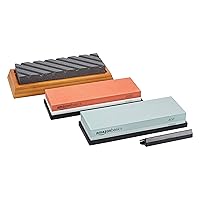
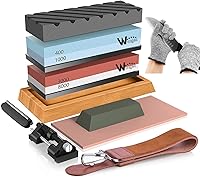
The SHARPAL 162N suits a confident freehand user who wants a larger, double-sided stone. It has coarse 325 grit and extra-fine 1200 grit surfaces, and its listed uses include ceramic.
Skip it if keeping the blade at a steady angle feels difficult.
The SHARPAL 168H is a better fit for a freehand user who wants an included angle guide. Its two sides are 325 and 1000 grit, and it comes with a non-slip pad.
The guide helps set an angle, but you still need to move the blade steadily; choose a slot tool if that sounds like too much control to manage.
For more help comparing stones by material and grit, see our sharpening stone buyer's guide. If you already know you want a diamond abrasive, our guide to diamond sharpening stones covers that category.
How should you set up and sharpen the knife?
Set the sharpener on a stable surface, then use the exact motion its instructions call for. Slot tools and flat stones need different hand movements, so don't transfer one method to the other.
For a slot-style sharpener, place it on a flat, level surface if the instructions direct you to do so. Hold the handle securely and draw the blade gently through the slot as directed.
Kyocera's wheel sharpener instructions call for several light backward pulls, followed by a thorough rinse.
For a flat stone, follow the maker's directions for angle, stroke, and surface care. Keep the blade steady throughout each pass, and let controlled contact do the work instead of pressing down.
Work slowly enough to keep your fingers clear of the edge and the blade from slipping. If the sharpener or knife doesn't feel secure, stop and change the setup before continuing.
What mistakes can damage a ceramic edge?
The main mistakes are choosing an incompatible sharpener, applying force, and continuing after you notice damage. Each can make a small sharpening job harder to control.
Don't use a sharpener unless its instructions name ceramic as compatible. Don't make extra passes just because the edge still feels dull after one or two, and don't press down harder to speed up the process.
Avoid sharpening a serrated blade with a tool that excludes serrations. The Kyocera wheel sharpener isn't for serrated blades, so check the directions before use.
Handle and store the knife so its edge won't knock against other knives or hard utensils. A sharpener won't protect the blade from chips caused by impact during storage or use.
Should you use a honing rod on a ceramic knife?
A steel honing rod isn't a substitute for sharpening a ceramic knife. Use a compatible diamond sharpener when the blade needs sharpening, and follow the tool's instructions.
A honing rod is commonly used to realign some steel edges. Don't apply that routine to ceramic unless the knife maker specifically recommends it; for a steel knife, our guide to how to use a honing rod explains the separate technique.
When should you stop and get professional help?
Stop and contact the knife maker or a professional sharpener if the blade is chipped, cracked, or hard to control. Those signs call for more than routine maintenance.
Ask whether the service accepts ceramic blades before sending the knife. If the maker offers care instructions, follow those for your particular knife.
A smoothly dulled edge may be a candidate for careful sharpening with a compatible tool. A visible chip, crack, or uneven section is a reason to avoid trying to grind the damage away at home.
Can you sharpen a ceramic knife at home, or should you get help?
For routine dullness, you can sharpen a ceramic knife at home with a compatible diamond tool and a light touch. Pick a slot sharpener if you want a guided path; choose a flat stone if you can control the angle and pressure.
If the edge is chipped or cracked, or you can't hold the knife steadily, ask the maker or a professional sharpener for help. For a steel kitchen knife, follow our separate guide to how to sharpen a chef's knife at home.
Frequently asked questions
Can you sharpen a ceramic knife with a regular whetstone?
A regular whetstone may not be suitable for ceramic, which is very hard and can chip if the tool or technique is wrong. Choose an abrasive sharpener whose instructions explicitly support ceramic blades, and follow its method.
If the blade is chipped or needs substantial repair, contact the knife maker or a professional.
Can you use a pull-through sharpener on a ceramic knife?
Use a pull-through sharpener only if its instructions say it works with ceramic blades. A tool made for steel isn't automatically suitable, and ceramic can chip if you force it.
Keep the sharpener stable, use light pressure, and stop if the blade catches or you see damage.
How often should you sharpen a ceramic knife?
Sharpen a ceramic knife when it no longer cuts as expected, rather than on a fixed schedule. Use a compatible diamond sharpener gently, or contact the maker or a sharpening service if the edge has a chip.
A honing rod made for steel isn't a substitute for ceramic sharpening.
Can a chipped ceramic knife be sharpened at home?
A dull edge and a visible chip need different care. Don't try to grind away a chip at home unless the knife maker gives clear repair instructions, since ceramic can chip further under force.
Ask the maker or a professional sharpener who accepts ceramic blades about repair.