Diamond vs Ceramic Sharpening Stone: Which to Buy? (November 2026)
Pick a diamond stone for fast edge repair and hard steels; pick a ceramic stone for polished, razor-fine edges on everyday kitchen knives. In this diamond vs ceramic sharpening stone comparison, the SHARPAL 156N is the best overall for most home cooks.
On this page (10 sections)
- Diamond vs ceramic sharpening stone: the short answer
- The two stone types side by side
- Which stone removes metal faster?
- Which stone stays flat longer?
- Which stone gives the sharper finish?
- Which stone handles hard steel and odd blades?
- How much soaking and upkeep does each need?
- Diamond or ceramic for a beginner?
- Which should you buy for kitchen knives?
- Verdict: which stone should you buy?
Pick a diamond stone for fast edge repair and hard steels; pick a ceramic stone for polished, razor-fine edges on everyday kitchen knives. In this diamond vs ceramic sharpening stone comparison, the SHARPAL 156N is the best overall for most home cooks because it cuts fast, stays flat and needs no water.
The choice really comes down to what your knives need. A dull, chipped blade wants the speed of diamond.
A knife that only needs a touch-up every few weeks does better on the smooth finish of ceramic.
We compared the specs and features of four stones in both families. This guide walks through the points that decide the choice, then names the stone we would buy for each kind of cook.


Diamond vs ceramic sharpening stone: the short answer
Diamond wins for speed and flatness; ceramic wins for edge polish and a gentler feel on the blade. Buy diamond if you repair edges often or sharpen hard steel.
Buy ceramic if you want the sharpest possible finish on ordinary kitchen knives.
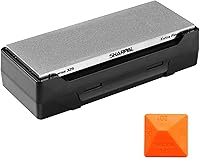
The SHARPAL 156N is the diamond pick we would start with. It has a 325 grit side for quick edge setting and a 1200 grit side for honing, and it sharpens dry.
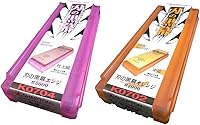
On the ceramic side, the HMPLL set is the most complete. Its two corundum stones carry four grits from 400 up to 8000, so you can repair a chip and then polish the edge.
That split is the whole answer. The rest of this comparison explains why each family behaves the way it does.
The two stone types side by side
The table below sums up how diamond and ceramic stones differ in use and upkeep. Read it as a quick map, then go deeper in the sections that follow.
| Feature | Diamond stone | Ceramic stone |
|---|---|---|
| How it cuts | Diamonds on a steel base grind fast | Abrasive particles cut slower and smoother |
| Lubrication | Dry, no water or oil | Water only, most need a soak |
| Flatness | Stays flat with even contact | Wears and needs flattening |
| Best grits | 325 coarse and 1200 fine on the SHARPAL | 400 to 8000 across the HMPLL set |
| Best for | Repair, hard steel, quick jobs | Polishing, everyday kitchen knives |
| Learning curve | Short, thanks to the flat surface | Slightly longer, needs soaking and angle control |
The SHARPAL 156N uses monocrystalline diamonds electroplated onto a 0.33 inch stainless steel base. SHARPAL says the stone stays flat because of its MirrorFlat surface.
The ceramic picks are corundum or aluminum oxide. The HMPLL stones are white corundum, while the Intelitopia set uses aluminum oxide.
Both cut by wearing away and exposing fresh particles.
That difference in construction drives every other point below.
Which stone removes metal faster?
Diamond removes metal faster than ceramic. SHARPAL says its diamond stone sharpens up to 5 times faster than an oil stone or water stone.
That speed shows up most on a dull or damaged edge.
The SHARPAL's 325 grit side is coarse enough to reset a bevel in a few passes. Its 1200 grit side then hones the edge without much extra work.
Both sides sharpen dry, so there's no soak to wait for.
Ceramic stones trade speed for control. The HMPLL 400 grit side handles chipped edges and dull knives, and its 1000 grit side does general sharpening.
The 3000 and 8000 grits refine and polish.
That's not a flaw in ceramic. A slower cut gives you more room to watch the edge and keep the angle steady.
If you sharpen carefully and don't need speed, ceramic is fine.
For a very dull knife or a chipped blade, the diamond stone gets you back to a working edge in less time. Our guide to the best diamond sharpening stone covers more options if repair speed is your main goal.
Which stone stays flat longer?
Diamond stays flat much longer than ceramic. A diamond stone's abrasive sits on a rigid steel base, so the working surface keeps its shape.
Ceramic stones wear as you sharpen and develop hollows that need flattening.
The SHARPAL 156N's 0.33 inch stainless base is what holds it true. SHARPAL says the MirrorFlat surface guarantees long-lasting even contact with knives and tools.
A flat stone keeps your angle consistent, which matters more than grit when you're learning.
Ceramic stones are softer in this sense. The HMPLL set includes a flattening stone so you can restore the surface when it dishes.
The Intelitopia set includes one as well. That's a real part of owning a ceramic stone, not an optional extra.
Flattening adds a step to your routine. You soak the stone, rub it on the flattening stone until the surface is even, and rinse.
Do it every few sessions to keep the edge consistent.
If you would rather skip that upkeep, diamond is the simpler long-term buy.
Which stone gives the sharper finish?
Ceramic gives the finer finish. Its fine grits polish an edge to a smooth, razor-like result.
Diamond's finest grit here, 1200, hones well but leaves a more aggressive edge.
The HMPLL 3000 and 8000 grits are built for refining and polishing. HMPLL says the 3000/8000 stones provide an extra fine finish on your blades.
That's the step that makes a kitchen knife glide through an onion.
The Sharp Pebble 1000/6000 whetstone covers a similar range in a lighter package. Its 1000 grit repairs dull edges and its 6000 grit polishes to a fine finish.
For everyday kitchen knives, that's most of what you need.
The SHARPAL's 1200 grit side is best described as a hone. It straightens and refines an edge, but it won't give you the mirror polish a high-grit ceramic stone will.
If a polished edge is your goal, plan on a ceramic finishing stone. Our roundup of the best knife sharpening stone includes both families if you want to compare grits and kits.
Which stone handles hard steel and odd blades?
Diamond handles hard steel and unusual materials better. SHARPAL says its stone sharpens all hard material, including high speed steel, carbide, ceramic and cubic boron nitride.
Those materials dull a water stone quickly.
The SHARPAL's diamonds also work on standard kitchen knives, pocket knives and tools. Its dual grit covers edge setting and honing on the same stone, so you can move from a chipped camp knife to a fine kitchen blade without changing stones.
Ceramic stones still handle ordinary carbon and stainless steel well. The HMPLL set works on carbon steel and stainless steel knives, scissors, razors, shears and even axes and chisels.
The Intelitopia set lists a long run of blade types too.
The limit is very hard steel. A ceramic stone will cut it, but slowly, and the stone wears faster.
If your collection includes high-hardness blades or workshop tools, diamond is the safer pick.
How much soaking and upkeep does each need?
Diamond needs no soaking and no oil; ceramic needs a soak and regular flattening. That difference matters if you sharpen in short bursts rather than sitting down for a long session.
The SHARPAL 156N sharpens dry. SHARPAL advises against using water because it can rust the iron filings on the surface.
The stone comes with a storage box that doubles as a non-slip base, plus an angle guide with four settings at 14, 17, 20 and 25 degrees.
The HMPLL stones need a 10 to 15 minute soak before use. You add water as you sharpen to keep the cut clean.
The set also includes a bamboo base, a silicone holder, a leather strop and a flattening stone.
The Sharp Pebble 1000/6000 is water-based too. It comes with a bamboo base, an angle guide and an instruction manual.
It weighs 2.1 pounds, so it's easy to store between uses.
The Intelitopia set is the heaviest of the ceramic picks at 5 pounds. It includes both grit pairs, a flattening stone, a strop, a bamboo base and an angle guide.
That's a lot of gear, and more gear means more steps.
Neither family is hard to live with. Diamond just asks less of you before and after each session.
Diamond or ceramic for a beginner?
A diamond stone is the easier start. It stays flat, needs no soak and comes with an angle guide on the SHARPAL.
Flatness and a steady angle are the two things beginners struggle with most.
The SHARPAL's four-angle guide takes some guesswork out of holding the blade. The storage case gives you a stable base, so the stone doesn't slide while you work.
You can sharpen a knife in a few minutes without prep.
A ceramic stone with a guide is a close second. The Sharp Pebble kit includes an angle guide and a manual, and its 1000 and 6000 grits cover dull edges and polishing.
The extra soak is the main difference.
The HMPLL set adds more steps: soak two stones, choose a grit, use the strop, flatten when needed. That's fine if you want to learn the full routine.
It's more to manage on day one.
Start with diamond if you want quick results and fewer moving parts. Move to ceramic later when you want a finer edge.
Our whetstone vs diamond stone comparison digs into the water-stone side of that decision.
Which should you buy for kitchen knives?
Buy diamond if your kitchen knives get dull and you want fast, low-mess upkeep. Buy ceramic if you want a polished edge and don't mind soaking the stone.
The right answer depends on your knives and your patience.
For most home cooks, the SHARPAL 156N is the stone to buy first. It handles dull edges fast, stays flat and needs no water.
The 325 and 1200 grits cover repair and honing in one tool.
If you already have a way to repair edges and want a finer finish, the HMPLL set is the better buy. Its 400 to 8000 grits take a knife from chipped to polished, and the kit includes the base, strop and flattening stone.
The Sharp Pebble 1000/6000 is a good middle ground. It's lighter than the HMPLL set and simpler than the Intelitopia set, and its two grits cover most everyday knives.
Choose it if storage space is tight.
The Intelitopia set suits cooks who want the whole ceramic routine in one box. It's heavier and needs soaking, but it covers both grit pairs plus a strop and flattening stone.
Our sharpening stone for kitchen knives buyer's guide helps you match grits to the knives you actually own.
Best for repair and hard steel: SHARPAL 156N
The SHARPAL 156N is the stone we would reach for when a knife is dull, chipped or made of hard steel. Its diamond surface cuts fast and stays flat, and it sharpens dry.
The angle guide and storage case make it a complete starter kit on their own.
Best ceramic kit overall: HMPLL Knife Sharpening Stone Set
The HMPLL set is the ceramic pick for cooks who want a polished edge. Two corundum stones carry four grits, and the kit includes a bamboo base, a strop and a flattening stone.
Plan on soaking the stones before each session.
Best for beginners on ceramic: Sharp Pebble 1000/6000 Whetstone
The Sharp Pebble 1000/6000 is the easiest ceramic stone to start with. It's light, water-based and comes with an angle guide and a manual.
Its two grits handle dull edges and a fine finish without a full kit to manage.
Best full ceramic set: Intelitopia 400/1000 and 3000/8000 Whetstone Set
The Intelitopia set is the complete ceramic package. It includes both grit pairs, a flattening stone, a leather strop, a bamboo base and an angle guide.
It's the heaviest pick here, so it suits cooks with space to keep it set up.
Verdict: which stone should you buy?
Buy the SHARPAL 156N diamond stone for most kitchens. It's the best overall pick in this diamond vs ceramic sharpening stone comparison because it cuts fast, stays flat and needs no water or oil.
The dual grit and angle guide make it a complete starter tool.
Choose a ceramic stone instead if a polished edge matters more than speed. The HMPLL set is the most complete ceramic kit, with four grits and the strop and flattening stone included.
The Sharp Pebble 1000/6000 is the simpler beginner pick.
A good plan for many cooks is one diamond stone for repair and one fine ceramic stone for finishing. That covers dull blades and polished edges without buying a full kit up front.
If you're still weighing the water-stone side of this choice, read our whetstone vs diamond stone comparison next.
Frequently asked questions
Is diamond or ceramic better for kitchen knives?
Diamond is better when your knives are dull or damaged and you want speed. Ceramic is better when you want a polished edge and don't mind soaking the stone first.
Most home cooks are happy with a diamond stone for upkeep and a ceramic stone for finishing.
Do ceramic stones wear out faster than diamond stones?
Ceramic stones do wear as you sharpen, and they need flattening to stay true. Diamond stones keep their flat surface far longer because the diamonds sit on a steel base.
The trade-off is that a diamond stone gives a coarser finish.
Can I sharpen hard steel on a ceramic stone?
Hard high-carbon and some stainless steels sharpen well on ceramic, but very hard steels cut faster on diamond. Diamond handles high speed steel, carbide and ceramic blades that dull a water stone quickly.
Check your blade type before you choose.
Do I need water or oil with these stones?
Diamond stones sharpen dry, so no water or oil is needed. Ceramic stones are lubricated with water only, and most need a short soak before use.
Skip oil on either type unless the maker says otherwise.
Which stone is easier for a beginner?
A diamond stone is the easier start because it stays flat and needs no soaking. A ceramic stone with an angle guide is a close second and gives a finer edge.
The guide matters more than the stone type when you're learning.
Can one stone replace the other?
No, they do different jobs. Diamond removes metal fast to reset a dull or chipped edge, while ceramic refines and polishes.
A diamond stone plus a fine ceramic stone covers both repair and finishing.